GRUENCY is the founder-led research & engineering practice of Sebastian Michalski: quantitative research and modelling, custom computing systems (WS.COMPUTER), digital applications and technical advisory — one discipline from mathematical model to working tool.
Machines, models and applications commissioned remotely across time zones — every bright point is a client country. Hover to identify.
Trusted by
MARVELVFX & CG artists
PIXARanimation artists
NVIDIAstudio & vendor work
MoMApermanent collection
& hundredsof artists worldwide
Private commissions by individuals working at or with these organisations — listed as context, not corporate endorsement.
The practice
Four disciplines. One standard.
Everything GRUENCY takes on passes through the same discipline: model the problem, engineer the system, validate it under load, stand behind it.
01Research
Scientific research & quantitative modelling
Econometrics, time-series analysis, Monte Carlo simulation and forecasting. The same methodology Sebastian published in Physica A (Elsevier) and applied at the National Bank of Poland — available to clients with hard quantitative problems.
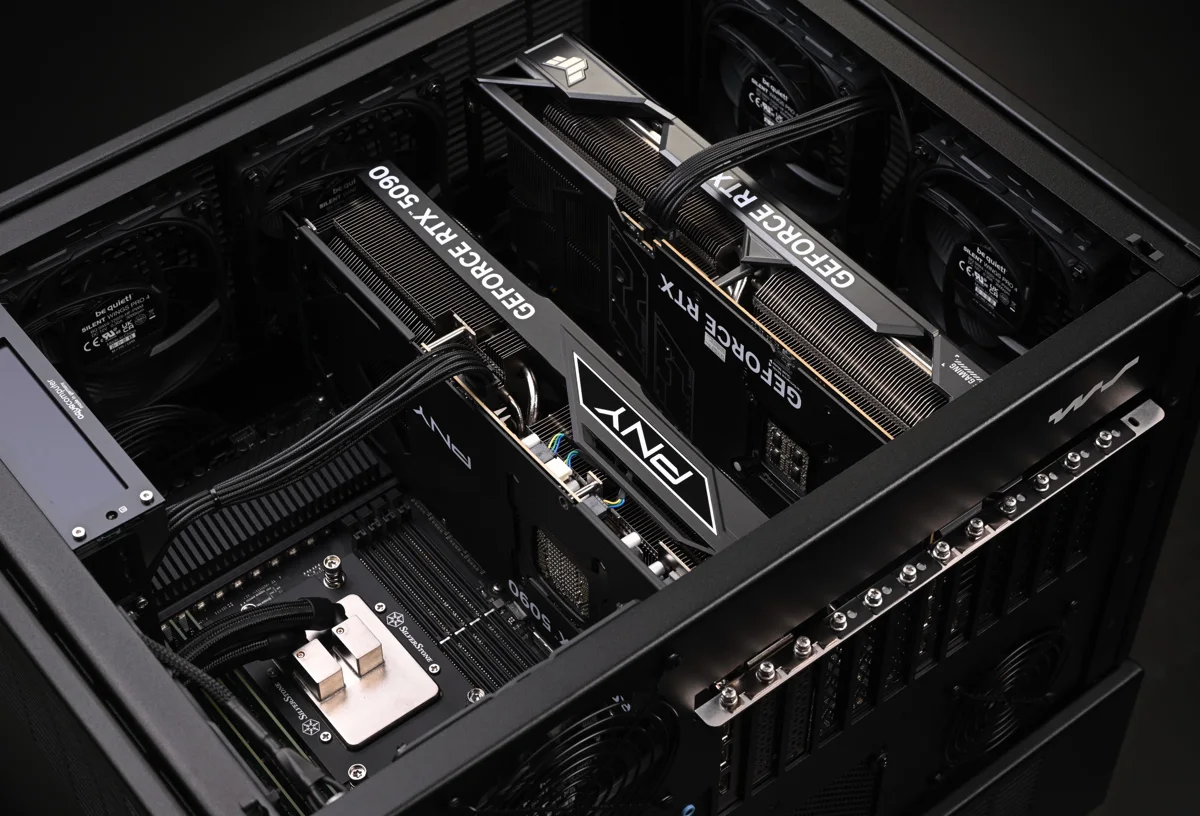
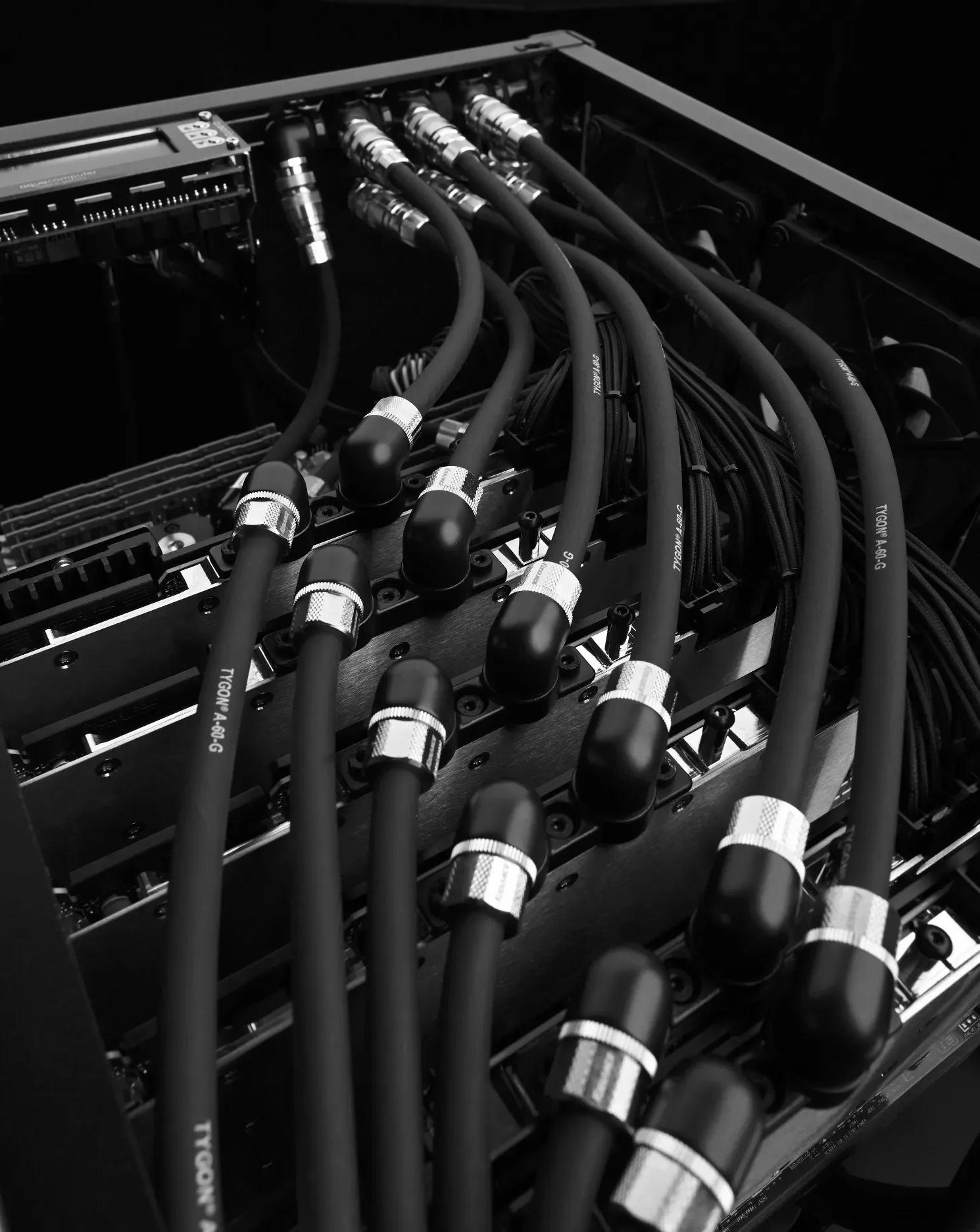
Multi-GPU workstations for AI/ML, GPU rendering, CAD and simulation. Server-grade dual-CPU platforms, ECC memory, custom water-cooling and CAD-designed chassis — specified to the workload, built to order, validated under sustained load.
Web applications, product configurators, technical documentation systems and AI-assisted workflows. Built the way the machines are built — specified first, engineered as working tools, maintained after handover.
Web systemsConfiguratorsAI workflows
04Advisory
Technical advisory & audits
Configuration audits, PCIe and thermal analysis, GPU compatibility reviews, damage assessment and technical second opinions. Engineering judgement without a sales agenda — GRUENCY sells nothing off a shelf.
The practice also spans computer graphics and PRO ROMANIS — a long-term reconstruction of classical Roman architecture. Not a service line: it is where the visual and modelling discipline behind GRUENCY's work is kept sharp.
Who it's for
Built for people who measure.
AI & ML teams
Training and local-LLM inference machines that stay stable at full power draw for days, not minutes.
Render & VFX studios
OctaneRender-class multi-GPU throughput, with an acoustic limit a working studio can live with.
Quant & research groups
Machines and models from someone who has published methodology — not just assembled parts.
Engineering & CAD
Simulation and visualization workstations balanced across CPU, GPU and memory bandwidth.
Product & founder teams
Configurators, documentation systems and AI-assisted workflows — built as working tools, not slideware.
Independent professionals
One machine or one tool, specified honestly, supported personally.
Engineering
From mathematical models to physical machines.
A · Hardware
Technical computing systems
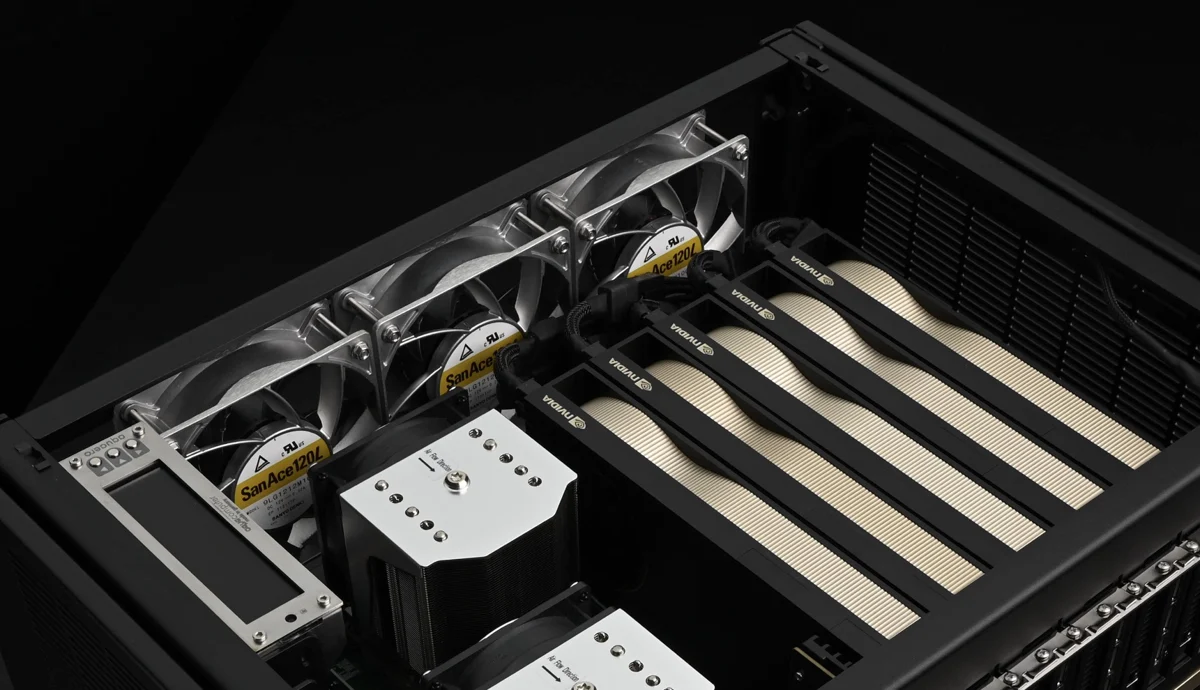
GRUENCY approaches hardware as a complete technical system: processor architecture, PCIe topology, GPU spacing, memory configuration, storage layout, cooling, power delivery, chassis structure, transport and long-term serviceability.
01Multi-GPU workstation architecture (up to 11 GPUs)
02Server-grade dual-CPU platforms and ECC memory
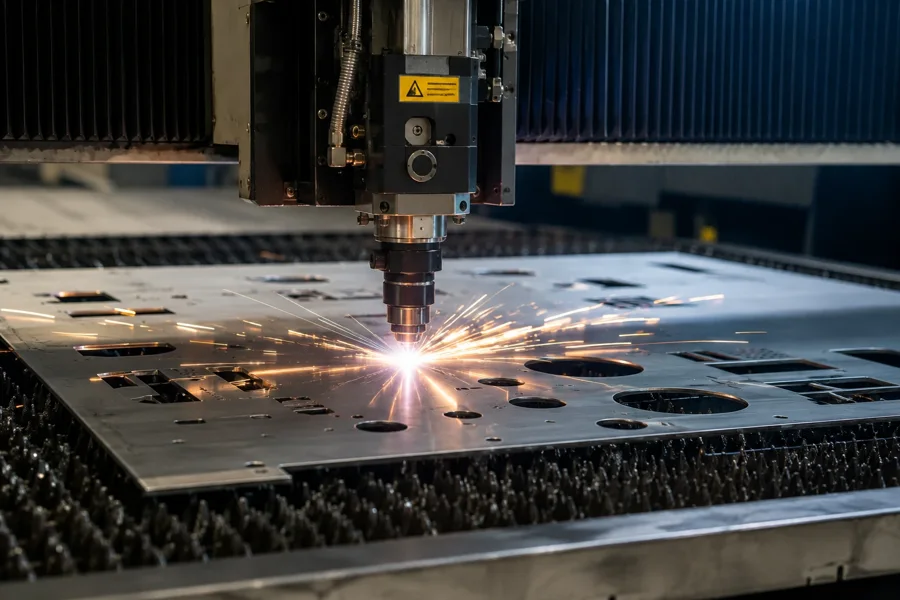
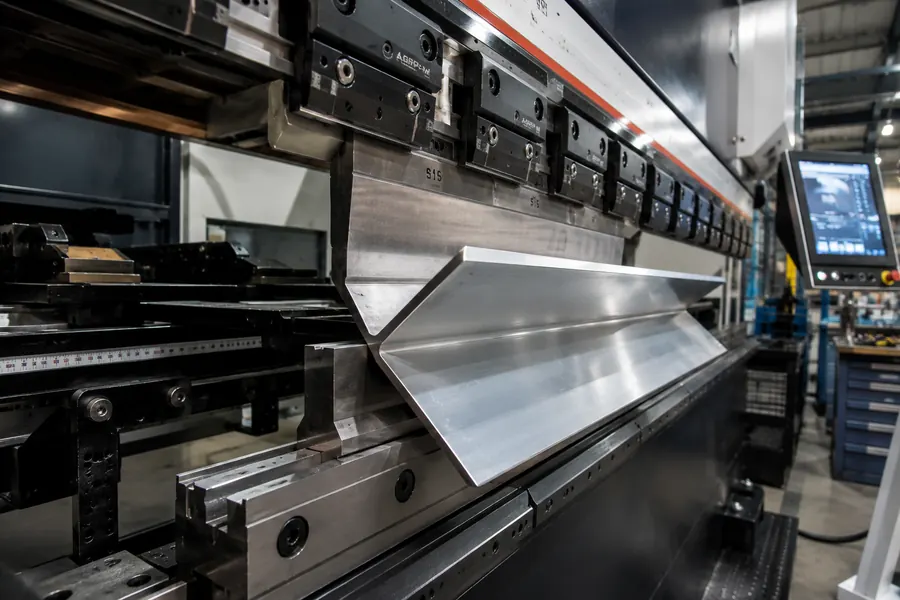
03Custom chassis design, CAD and manufacturing
04Water-cooling and thermal validation
05AI/ML and local LLM compute infrastructure
06Remote commissioning and professional support
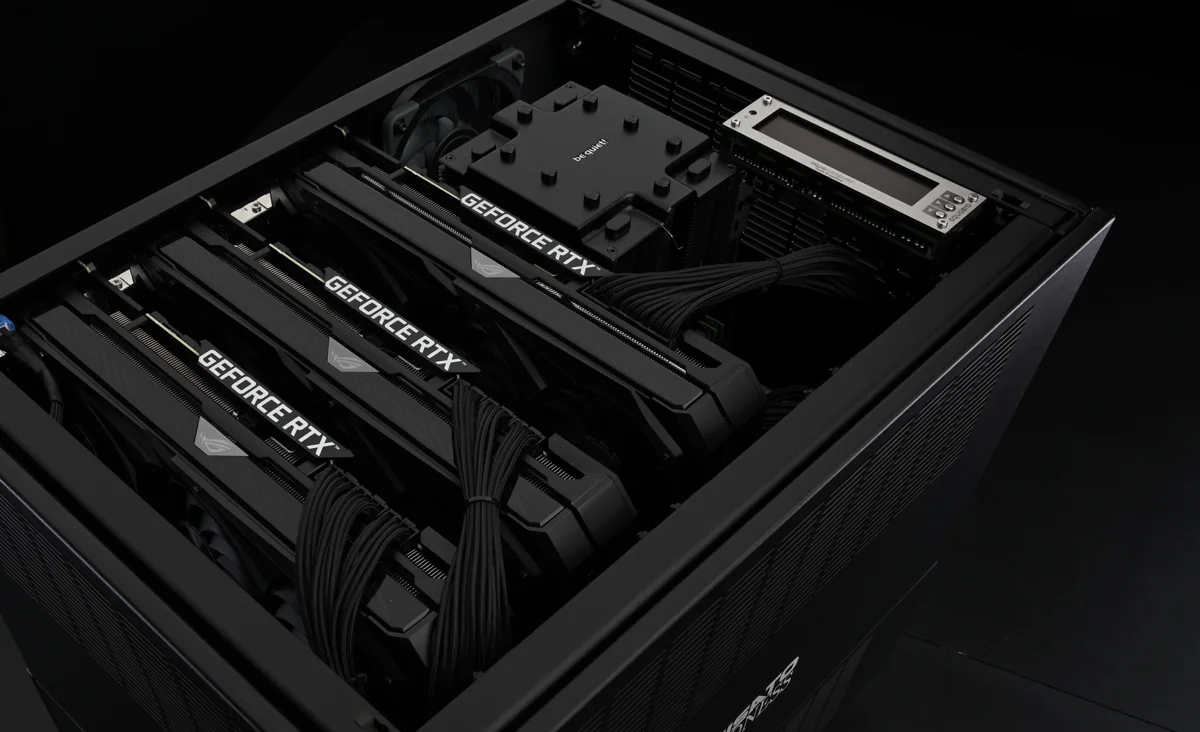
Fig. 01 · WS.COMPUTER № 10004 special edition — as delivered
B · Digital
Digital, research and AI systems
The same systems approach is applied to software, modelling and information architecture. GRUENCY develops practical tools for analysis, documentation, product configuration, visual production and AI-assisted technical workflows.
01Econometric and statistical programming
02AI-assisted research and documentation pipelines
03Web applications, configurators and digital tools
04Structured technical content and knowledge systems
05Data, modelling and decision-support workflows
06Computer graphics and rendering pipelines
C · Validation
Nothing ships on faith
Every build is burn-in tested under sustained full load, thermally profiled per GPU, checked against its acoustic target, photographed at every stage, and commissioned remotely with the client. The machine arrives with its own test record.
01Sustained full-load burn-in before delivery
02Per-GPU thermal profile under real workloads
03Acoustic check against the agreed target
04Photo documentation of the entire build
05Remote commissioning with the client on arrival
Representative systems
Shapes, not SKUs.
Every WS.COMPUTER machine is specified from the workload backwards. These are three shapes the practice returns to — yours will be its own.
Flagship · 11× GPU
The world first, still the reference
A dual-CPU, server-grade platform under an eleven-GPU custom loop, in a CAD-designed, laser-cut chassis. Built in 2017 — the machine WS.COMPUTER is known for.
AI development · 2–4× GPU
Training & local inference
Workstation or server class, ECC memory sized to the model, cooling specified for sustained full-power runs rather than benchmark bursts.
Render node · 4–7× GPU
Octane-class throughput
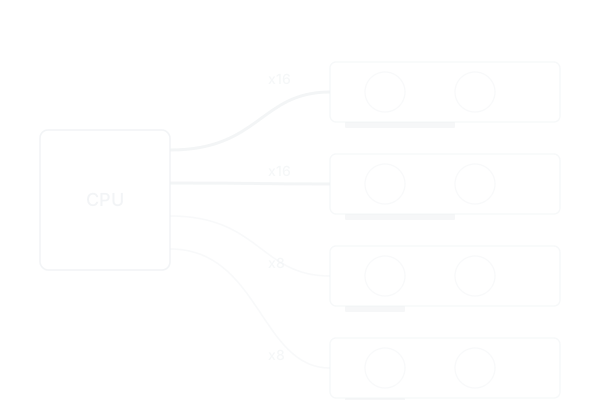
PCIe topology planned lane-by-lane, an acoustic budget agreed up front, remote commissioning — and a direct line for the machine’s whole life.
Sebastian Michalski combines a quantitative academic background with two decades of technical entrepreneurship: econometric research and cash-circulation forecasting at the National Bank of Poland, sole-author methodology published in Physica A (Elsevier), academic teaching at SGH Warsaw School of Economics — and, since 2014, the design and manufacture of advanced multi-GPU workstation systems as founder of GRUENCY and WS.COMPUTER.
The two halves are one discipline. The person who models a workload statistically is the same person who lays out its PCIe topology, designs the cooling loop around its sustained draw, and answers the phone when the machine is three years old.
First-degree award from the President of Poland's central bank
Awarded personally by Prof. Leszek Balcerowicz for cash-circulation optimisation and economic modelling work.
SGH Warsaw School of Economics
Rector's First-Degree Award
For contribution to Econometrics and Operations Research — PWN Polish Scientific Publishers.
Elsevier / Physica A
Sole-author, peer-reviewed methodology
Monte Carlo study reducing bias and variance in Detrended Fluctuation Analysis (DFA) — a method used across econometrics, biomedical signals and climate research.
World-first prototype
11 water-cooled GPUs. One chassis. 2017.
Server-grade dual-CPU architecture in a single CAD-designed case — unmatched at the time of build.
NVIDIA vendor collaboration
Visual production & AI compute systems
External NVIDIA vendor work and workstation systems for VFX, rendering, AI/ML and visualization workflows worldwide.
OctaneRender community
Benchmark-leading multi-GPU configurations
Custom chassis manufacturing and long-term technical support for professional render and compute users.
Process
How the work happens.
01
Consultation
A conversation about the problem — a workload, a model, an application, a machine. No charge, no obligation.
02
Specification
Scope, architecture and reasoning: topology and thermal budget for hardware, methodology for research, structure for software — with a fixed quote.
03
Execution
Hardware is built by hand in Warsaw and photo-documented. Research and software are developed against the specification, with checkpoints you see.
04
Validation
Machines get sustained burn-in, thermal profiling and an acoustic check. Models and applications are tested against the brief before handover.
05
Support
Remote commissioning, then a direct line to the person who did the work — for years, not a ticket queue.
Why GRUENCY
A practice, not a vendor.
vs product vendors
A vendor sells what is on the shelf. GRUENCY starts from your problem — a model, a workload, an application — and has no shelf.
vs agencies & integrators
Agencies route your project through layers of hands. Here the person who takes the brief is the person who does the work — and answers for it years later.
vs piecing it together
You can assemble parts, hire ad hoc, glue tools together. What you cannot buy piecemeal is one accountable discipline from mathematical model to machine to working tool.
Honesty clause
And when an off-the-shelf product genuinely serves you better, the consultation ends with that recommendation. It has happened before.
FAQ
Asked before starting.
What does GRUENCY actually do?
Four things, one discipline: scientific research and quantitative modelling; custom multi-GPU computing systems under the WS.COMPUTER brand; digital applications and technical content systems; and independent technical advisory.
Where does WS.COMPUTER end and GRUENCY begin?
WS.COMPUTER is GRUENCY's hardware line — the workstations themselves. GRUENCY is the practice around it: research, design, software and advisory. One founder, one standard, two names.
Why custom hardware instead of an off-the-shelf Dell or HP?
A big-OEM workstation is a fine generic instrument — but it is not built around your PCIe lane budget, your acoustic ceiling or an 800-watt sustained draw, and a checkbox configurator optimises for parts in stock. When off-the-shelf genuinely serves the workload, you will hear exactly that.
How long does a custom workstation take to build?
Component availability sets the pace. You receive a committed delivery date together with the fixed quote — and progress photos while the machine is built.
Do you deliver outside Poland?
Yes — EU-wide and worldwide. Machines travel in custom transport packaging, and remote commissioning on arrival is standard.
What does support look like?
Component warranties are passed through in full, workmanship is guaranteed by the practice, and support is a direct line to the person who did the work — not a ticket queue.
What do systems and projects cost?
Hardware is quoted as a fixed price after specification — no configurator surprises. Research and application work is scoped and quoted per engagement. Budget is discussed openly in the first conversation.
Can you audit a machine or review work I already have?
Yes. Configuration audits, PCIe and thermal analysis and damage assessment are a standing service — as are second opinions on models, data work and technical plans, independent of who did the original work.
Do you build servers or clusters?
Rack systems and small clusters, yes — under the same validation discipline. Data-centre scale, no: that is a different business, and an honest practice says so.
Contact
Start with a conversation.
Describe the workload, the constraint, or the question. Sebastian reads and answers every enquiry personally — within two working days.