Prototype, 2017
11 water-cooled GPUs in one chassis
A dual-CPU server platform with a single custom water loop in a CAD-designed chassis.

GRUENCY / Workstation architecture
Workstation architecture means planning PCIe lanes, power, noise and memory together, so the machine suits its workload on delivery and in the years after. GRUENCY applied this method to the 11-GPU build in 2017 and applies it to every WS.COMPUTER machine.
Each workstation balances four limited resources. The architecture sets the trade-offs between them in writing.
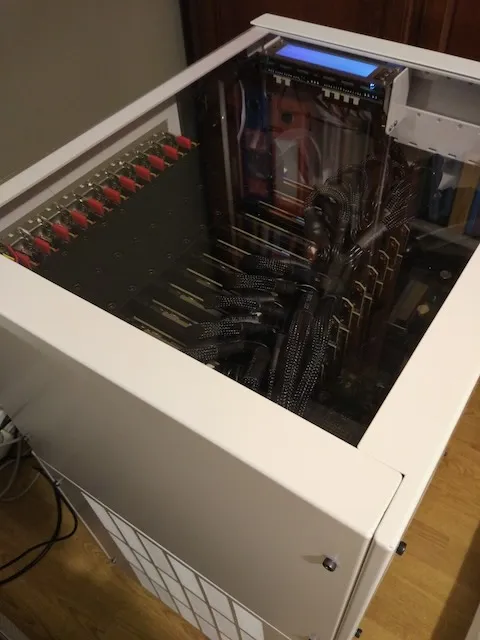
A dual-CPU server platform with a single custom water loop in a CAD-designed chassis.
Render throughput planned through PCIe topology and cooling.
Workstation designs across successive hardware generations, with the same method.
Both. The architecture comes first and the build follows. The architecture can also be delivered on its own, as a written design for another party to build.
Yes. The topology, thermal design and component reasoning are delivered in writing, and the build can take place anywhere. Reviews of existing designs are covered under Technical advisory.
A configurator checks that parts are compatible. Architecture plans PCIe lanes, power, noise and memory for a specific workload and for later upgrades.
Describe the workload and where the machine will be used.
Or email info@gruency.com